


Hugo Junkers understood something that many engineers miss throughout their entire careers. The most elegant solutions rarely come from starting with a blank page and working through first principles. They come from recognizing that a problem you face today has already been solved somewhere else in a different context. The art lies not in inventing from nothing but in seeing connections across domains that others overlook.
This approach defined every major achievement of his life. It shaped how he designed measurement instruments, how he revolutionized home heating systems, how he built aircraft, and how he ran his businesses. The pattern remained consistent throughout five decades of technical work.
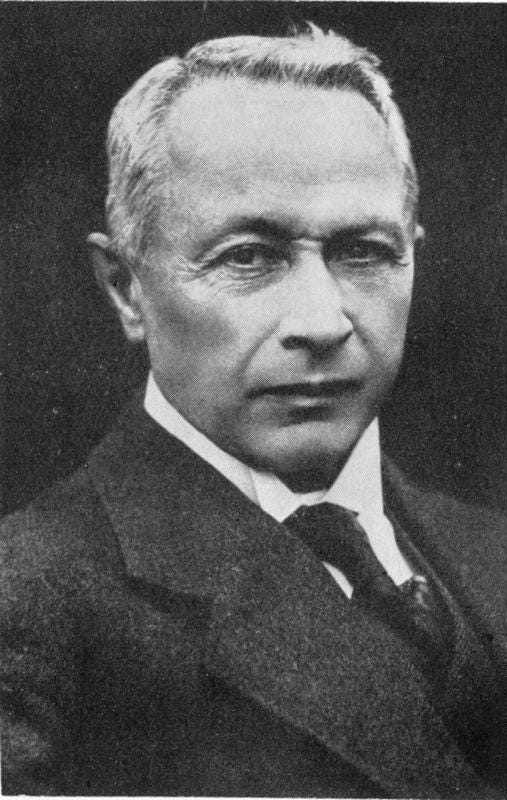
Junkers arrived at Continental-Gasgesellschaft in Dessau during a period when gas engines were becoming industrial workhorses but nobody could measure their actual efficiency with any reliability. The fundamental problem was deceptively simple. To optimize an engine’s performance, you needed to know the energy content of the fuel you were burning. But existing measurement methods gave inconsistent results because they failed to account for heat losses and measurement errors in systematic ways.
Junkers approached the problem methodically. He built a device that measured temperature differences in precisely controlled volumes of water as they absorbed heat from burning gas samples. The calorimeter he patented in 1892 eliminated the guesswork by creating a closed system where energy inputs and outputs could be tracked with unprecedented accuracy. The device worked so reliably that it won the gold medal at the 1893 World’s Columbian Exposition in Chicago, where engineers from around the world recognized its practical value immediately.
Most inventors would have stopped there, satisfied with solving the problem they had been hired to address. Junkers kept thinking about the principles behind his calorimeter. He had created a system that efficiently transferred heat from a burning gas flame to flowing water while measuring that transfer precisely. The measurement aspect was specific to the calorimeter application, but the heat transfer mechanism itself was more fundamental.
At that time, nearly every household in German cities relied on gas boilers for hot water. These systems worked by maintaining large insulated tanks of water at constant temperature, burning gas continuously or intermittently to keep the stored water hot. The inefficiency was obvious to anyone who thought about it carefully. Most homes used hot water for just a few minutes each day, yet the system maintained an entire tank at elevated temperature around the clock, radiating heat into the surrounding space whether anyone needed hot water or not.
Junkers saw the connection. His calorimeter had already proven that you could transfer heat efficiently from a gas flame to flowing water through metal tubes. Why heat and store water in advance when you could heat only what you needed, exactly when you needed it? The technical principle was identical, but the application was completely different.
In 1894, he filed the patent for the first tankless gas water heater. Instead of maintaining a large volume of water at temperature, the device heated water on demand as it flowed through a series of tubes positioned directly in the flame path. The gas burner ignited only when someone opened a hot water tap and shut off immediately when the tap closed. Same thermal dynamics principle as the calorimeter, applied to solve an entirely different problem.
The device worked remarkably well from the first production units. It eliminated standby heat losses, reduced gas consumption dramatically, and provided hot water continuously for as long as needed without the capacity limitations of a storage tank. More than a century later, tankless water heaters based on this same principle remain standard equipment in German homes and are gaining adoption worldwide as energy efficiency becomes increasingly important.
This pattern of transferring solutions across domains became the defining characteristic of Junkers’ approach to engineering. When he turned his attention to aviation in the early 1910s, he brought the same methodology. Aircraft construction at that time relied almost entirely on wood structures covered with fabric. These designs worked adequately at the relatively low speeds and altitudes of early flight, but they had fundamental limitations. Wood varied in strength depending on grain orientation, moisture content, and natural defects. Fabric coverings degraded quickly under exposure to sun, rain, and oil. The entire structure flexed and distorted under aerodynamic loads in ways that were difficult to predict or control.
Junkers had spent years working with sheet metal in various industrial applications. He understood its properties better than most engineers of his generation. Metal structures could be calculated with confidence using established engineering principles. They maintained consistent strength regardless of orientation. They could be formed into complex shapes that were impossible with wood. Most importantly, metal could serve as both structure and aerodynamic surface simultaneously, eliminating the need for separate covering materials.
The challenge was making metal aircraft practical. Early attempts by other designers had produced machines that were too heavy to fly efficiently. Junkers recognized that the solution lay not in minimizing metal use through traditional truss structures, but in using the metal skin itself as a structural element. He developed corrugated sheet metal construction, where regular waves pressed into thin metal sheets dramatically increased their stiffness without adding proportional weight.
His collaboration with Theodore von Kármán at the Technical University of Aachen brought theoretical rigor to these practical insights. Von Kármán’s aerodynamic analysis showed that cantilever wings could be designed to carry flight loads without external bracing, provided the internal structure was designed correctly. In 1915, Junkers combined these principles in the J-1, the first practical all-metal aircraft with cantilever wings. The machine was substantially heavier than contemporary wooden aircraft, but it proved far more durable and maintained its aerodynamic properties more consistently.
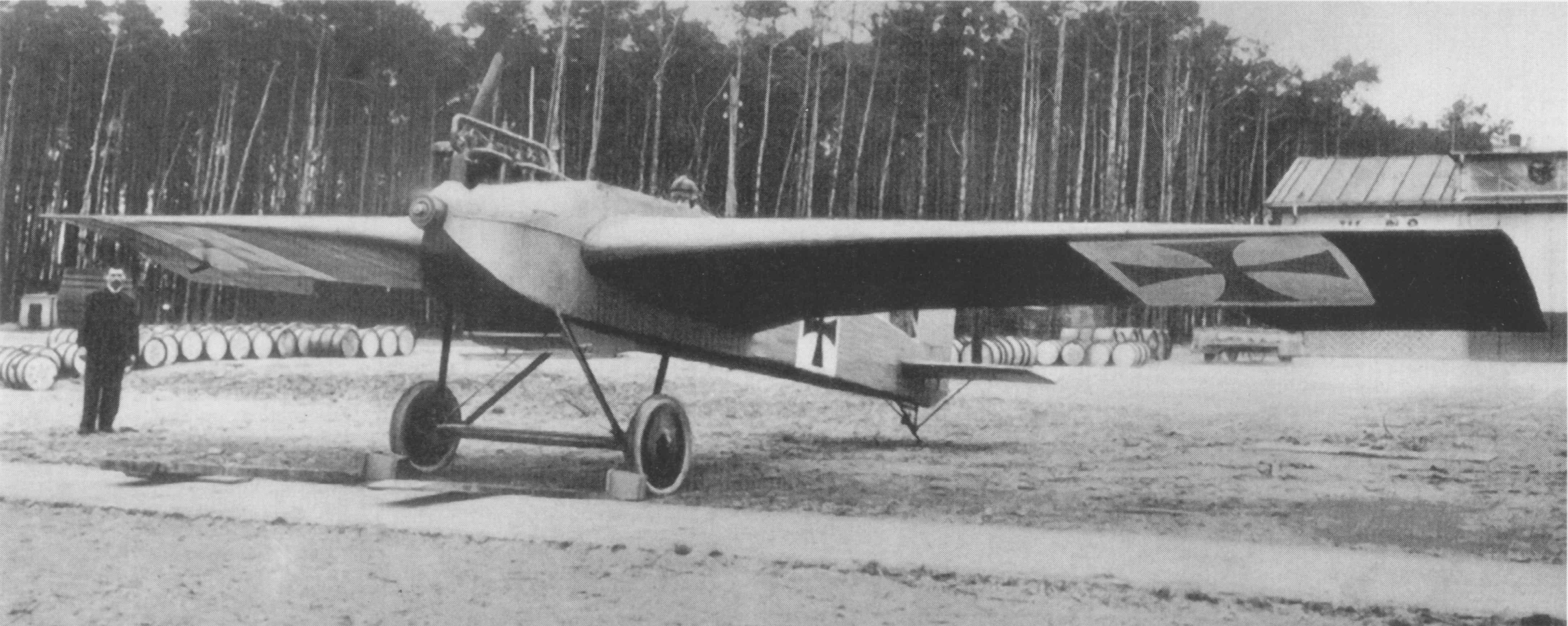

The corrugated metal construction patent he filed in 1910 transferred sheet metal forming techniques from industrial applications to aviation. This approach influenced aircraft design globally. Soviet engineer Andrei Tupolev built his career around all-metal aircraft inspired by Junkers’ designs. American engineer William Bushnell Stout used similar principles in the Ford Trimotor, one of the first commercially successful passenger aircraft. The technique remained relevant until monocoque stressed-skin construction superseded it in the 1930s.
Junkers applied the same cross-domain thinking to engine development. During the 1920s, diesel engines offered theoretical advantages for aviation through higher fuel efficiency and reduced fire risk, but existing designs were too heavy for practical use in aircraft. Most diesel engines followed automotive practice with four-stroke cycles and conventional piston arrangements.
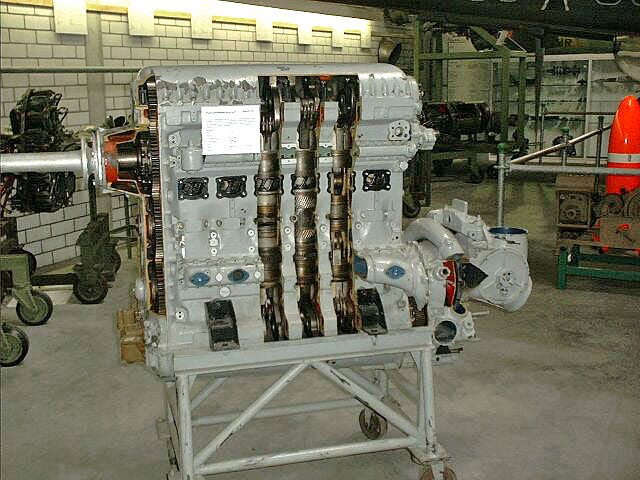
Junkers recognized that marine diesel engines had already solved parts of this problem through opposed-piston, two-stroke designs. In these engines, two pistons operated in each cylinder, approaching each other from opposite ends and eliminating the need for cylinder heads and valve mechanisms. This configuration reduced weight and complexity substantially while maintaining the high compression ratios needed for diesel combustion.
The Junkers Jumo diesel engine series, particularly the Jumo 205, demonstrated the viability of this approach. The engine used twelve pistons in six cylinders, with each cylinder containing two pistons approaching from opposite ends. The design achieved remarkable efficiency while running as cleanly as four-stroke engines despite its two-stroke operation. More than 900 Jumo diesel engines were produced between 1932 and 1945, making them the only successful aircraft diesel engines in large-scale production for decades. Modern aviation diesel development, experiencing renewed interest for improved fuel efficiency, still references Junkers’ opposed-piston approach as a proven configuration.

Even his business strategy followed this pattern of transferring principles across contexts. In the early 1920s, commercial aviation struggled to compete economically with rail and road transport over short routes where existing infrastructure worked well. Junkers recognized that aviation’s advantage lay not in competing directly with established transport modes but in serving routes where ground transportation was impractical or impossible.
He founded Deutsche Luft Hansa and Lloyd Aéreo Boliviano specifically to pioneer mail and passenger service in regions where geography made ground transport inefficient. Bolivia’s mountainous terrain made air transport not just faster but often the only practical option for reaching isolated communities. This focus on underserved markets established viable business models that later expanded as aircraft capabilities improved.
Throughout his career, Junkers maintained clear principles about the proper use of engineering capability. When the Nazi regime seized power in 1933 and began demanding participation in rearmament programs, he refused on principle. The regime responded by seizing his companies and placing him under house arrest. He remained imprisoned in his own home until his death in 1935 at age 76, deprived of the companies he had built but never compromising on his conviction that engineering should serve peaceful purposes.
Junkers demonstrated that breakthrough engineering often comes not from solving problems in isolation but from recognizing how solutions already developed in one domain can unlock opportunities in another. This requires both deep technical knowledge across multiple fields and the creative insight to see connections that others miss. His calorimeter became a water heater. His understanding of sheet metal forming became an aircraft construction technique. His knowledge of marine diesel principles became aviation engines. Each transfer required more than simple copying. It demanded understanding the fundamental principles well enough to adapt them to new constraints and requirements.
The engineers who make the most significant contributions rarely work in just one domain. They range across multiple fields, always watching for principles and solutions that might apply elsewhere. This remains as relevant today as it was in Junkers’ time. The next breakthrough in your field might already exist as a proven solution in someone else’s domain, waiting for an engineer with broad enough perspective to recognize the connection.
If you find value in Engineering Airworthiness, consider subscribing for free.
If you think someone might benefit from it, feel free to share it.