


Alexander Lippisch demonstrated that systematic experimental methodology produces validated knowledge even when official opinion declares the approach worthless. His progression from small flying models through full-scale gliders to powered aircraft established the delta wing configuration that dominates high-speed aviation today.
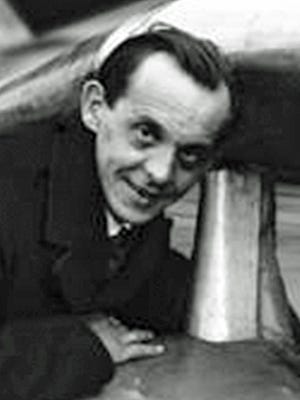
Born on 2 November 1894 in Munich, Lippisch initially planned to follow his father Franz, a successful painter, into art school. His interest in aviation began after witnessing Orville Wright’s demonstration flights at Tempelhof Field in Berlin in September 1909. The outbreak of World War I redirected his path; during his service with the German Army from 1915 to 1918, he flew as an aerial photographer and mapper, developing the visualization skills that would later influence how he conceptualized aerodynamic flow and aircraft configurations.

After the war, Germany faced severe restrictions under the Treaty of Versailles. Powered military aircraft development was prohibited, and even civilian aviation faced limitations designed to prevent Germany from rebuilding air power. These restrictions forced German aviation engineers to work within severe constraints. Lippisch embraced gliding as his primary development tool, recognizing several advantages beyond legal status: gliders required no expensive engines or fuel, could be built quickly and cheaply using wood and fabric, and provided direct feedback about aerodynamic behavior without the complications introduced by engine power, propeller slipstream, and fuel consumption.
Systematic Flight Testing Methodology
Lippisch developed a rigorous methodology that progressed through defined stages. First came small flying models that could be built in days and tested immediately, revealing basic stability characteristics and control effectiveness at minimal cost. Successful model designs progressed to full-scale gliders that could be built in weeks rather than the months required for powered aircraft. Finally, proven glider designs could be adapted to powered flight once the aerodynamic behavior was thoroughly understood.
This approach differed fundamentally from the wind tunnel methodology that dominated aviation research in Britain and America. Wind tunnels provided controlled conditions and precise measurement, but they required substantial capital investment and operating costs. More fundamentally, wind tunnels tested scale models or components rather than complete aircraft. The relationship between wind tunnel results and actual flight behavior involved uncertainties that could only be resolved through flight testing.
Lippisch’s methodology accepted less precise measurement in exchange for testing complete aircraft in actual flight conditions from the beginning. Each flight provided data about stability, control response, handling qualities, and performance that no wind tunnel could fully replicate. The approach worked particularly well for exploring unconventional configurations where wind tunnel correlations were least reliable.
The Tailless Aircraft Challenge
Throughout the 1920s and early 1930s, Lippisch systematically investigated tailless aircraft configurations. Conventional aircraft used horizontal tail surfaces located well behind the wing to provide pitch stability and control. This arrangement worked reliably but created parasitic drag from the tail structure and required additional weight. Eliminating the tail offered potential advantages in drag reduction and weight savings, but it required solving stability and control problems that conventional designs avoided.
The fundamental challenge involved coupling between pitch and roll motions in tailless aircraft. Conventional aircraft separated these motions through independent control surfaces: elevators controlled pitch, ailerons controlled roll, and the rudder controlled yaw. Tailless aircraft required combining pitch and roll control functions in the same control surfaces located on the wing trailing edge. These controls, called elevons, moved together to control pitch and differentially to control roll. This coupling complicated pilot technique and created potential stability problems.
Following the war, Lippisch worked with the Zeppelin Company, where he first became interested in tailless aircraft. In 1921, his first design to be built was the Espenlaub E-2 glider, constructed by his friend Gottlob Espenlaub. This was the beginning of a research programme that would result in some fifty designs throughout the 1920s and 1930s. His growing reputation saw him appointed in 1925 as director of the Rhön-Rossitten Gesellschaft, a glider organisation including research groups and construction facilities.
The First Rocket-Powered Aircraft
In 1928, Lippisch achieved a historic milestone through collaboration with the Opel-RAK program. Fritz von Opel, grandson of the German auto manufacturer, had been conducting rocket vehicle demonstrations with pyrotechnics manufacturer Friedrich Sander and rocketry advocate Max Valier. The group visited the Wasserkuppe, the center of German gliding, to investigate fitting rockets to aircraft. They encountered Lippisch’s revolutionary tailless gliders, which seemed suitable for rocket propulsion due to their configuration.
Lippisch’s tail-first Ente (Duck) was equipped with two black powder rockets. On 11 June 1928, test pilot Fritz Stamer flew the Ente for approximately 1,500 meters in about 80 seconds, completing the first rocket-powered flight of a piloted aircraft in history. On a subsequent flight attempting to fire both rockets simultaneously, one exploded, setting the aircraft alight. Stamer managed to land safely, but the Ente was destroyed. Despite this setback, the experience proved foundational for later rocket-powered aircraft development.
From Storch to Delta
Lippisch developed a series of progressively refined designs. The Storch series (Storch I through IX) between 1927 and 1933 explored tailless configurations with swept wings. Each design incorporated lessons from previous flights. Wing sweep affected how the coupling between pitch and roll developed during maneuvers. Wing twist distribution influenced stall behavior. Control surface sizing determined control effectiveness at different speeds. He accumulated knowledge systematically through hundreds of test flights.
Experience with the Storch series led Lippisch to concentrate increasingly on delta-winged designs. In 1931, the Delta I glider became the first delta wing aircraft to fly successfully, followed by the Delta II and III. These designs attracted limited interest from government and private industry, and Lippisch faced official skepticism after the Delta III ended in a crash.
The Delta IV project began with an order from Gerhard Fieseler for the 1932 Europarundflug air rally. The resulting Fieseler F3 Wespe proved highly unstable and crashed on its first flight. Further refinements could not correct these deficiencies, and Fieseler abandoned the aircraft. Lippisch continued to believe the problems were surmountable and found an ally in Professor Walter Georgii of the DFS (Deutsche Forschungsanstalt für Segelflug), which had been formed in 1933 from the reorganized RRG.
The DFS 39 Validation
After multiple iterations, Lippisch produced the Delta IVc with less severe wing sweep, small downturned wingtip fins, and a lengthened fuselage with a small rudder. In 1936, the aircraft was taken to the Luftwaffe flight-testing centre at Rechlin, where test pilot Heini Dittmar put it through comprehensive evaluation. The aircraft gained an airworthiness certificate and the official RLM designation DFS 39.
The DFS 39 proved to be an extremely stable and well-behaved design. It demonstrated that tailless delta wings could fly with acceptable handling characteristics across the full speed range from landing to high-speed cruise. The design incorporated swept wings, carefully designed wing twist, and properly sized elevon controls. It proved stable in all axes and demonstrated no dangerous characteristics within its normal operating envelope.
This validation opened practical applications. The German Air Ministry, which had previously shown limited interest, now recognized the potential for rocket-powered applications. The DFS 39 attracted interest as the basis for Project X, the programme to develop a rocket-powered research aircraft.
The Me 163 Komet
In early 1939, the Reichsluftfahrtsministerium transferred Lippisch and his team to work at the Messerschmitt factory in Augsburg to design a high-speed fighter aircraft around the rocket engines then under development by Hellmuth Walter. The team quickly adapted their most recent design, the DFS 194, to rocket power, with the first example successfully flying in early 1940.
This directly led to the Messerschmitt Me 163 Komet, the only rocket-powered aircraft to enter combat operations during World War II. The Me 163 represented extreme performance, achieving speeds exceeding 960 km/h and climbing to 9,000 meters in 2.5 minutes. Although technically novel, the Komet did not prove to be a successful weapon operationally, and friction between Lippisch and Messerschmitt was frequent. In 1943, Lippisch transferred to Vienna’s Aeronautical Research Institute (Luftfahrtforschungsanstalt Wien) to concentrate on the problems of high-speed flight. That same year, he was awarded a doctoral degree in engineering by the University of Heidelberg.
Supersonic Research
Wind tunnel research in 1939 had suggested that the delta wing was a good choice for supersonic flight. Lippisch set to work designing a supersonic, ramjet-powered fighter, the Lippisch P.13a. His understanding of swept wing behavior indicated that delta wings might offer advantages at speeds approaching and exceeding Mach 1. By the time the war ended, the project had only advanced as far as a development glider, the DM-1.
After Germany’s defeat, American forces captured substantial documentation of Lippisch’s work along with the DM-1 and partially completed experimental aircraft. Lippisch himself was brought to the United States in 1946 under Operation Paperclip, the program to recruit German scientists. He worked for Air Technical Intelligence in Paris and London until 1946, then at Wright Field in 1947, and from 1947 to 1950 at the Naval Air Material Center in Philadelphia.
American Influence
The influence of delta wing research appeared quickly in American designs. Engineers at Consolidated-Vultee became interested in delta wings for their proposed XF-92 interceptor. While Convair engineers had independently developed delta wing concepts using Robert T. Jones’s 1944 work on very thin delta wings, conferences with Lippisch helped validate the approach. The Consolidated-Vultee Model 7002 was built as a flying testbed for delta wing behavior.
On 18 September 1948, the XF-92A made its first flight with test pilot Ellis D. Shannon at the controls, becoming the first jet-powered delta-wing aircraft to fly. Although the aircraft itself proved difficult to handle and underpowered, the design concept clearly had promise. Chuck Yeager, who tested the aircraft for the Air Force, pushed it to Mach 1.05 in a dive and demonstrated unexpectedly good low-speed behavior at very high angles of attack.
The delta wing philosophy spread through the American aviation industry. The F-102 Delta Dagger and F-106 Delta Dart interceptors used refined delta configurations. The B-58 Hustler bomber adopted a compound delta wing to achieve supersonic cruise capability. European designers reached similar conclusions: the Dassault Mirage series, the Avro Vulcan bomber, and the Anglo-French Concorde all adopted delta configurations. Modern stealth aircraft including the F-117 and B-2 use delta-derived planforms to achieve both aerodynamic performance and radar signature reduction.
Education and Legacy
From 1950 to 1964, Lippisch worked for the Collins Radio Company in Cedar Rapids, Iowa, as director of the Aeronautical Research Laboratory. During this period, his interest shifted toward ground effect craft, resulting in the unconventional Aerodyne VTOL concept and the X-112 aerofoil boat research vehicle.
He also focused on education and public outreach, recognizing that scientific knowledge produces no broader benefit if it remains confined to specialists. He created and narrated a 13-part television series called “The Secret of Flight,” produced by the State University of Iowa in the mid-1950s, that explained aerodynamic principles to general audiences. The series demonstrated flight principles using simple physical demonstrations and smoke tunnel visualizations accessible to viewers without technical background. This represented a departure from the academic culture of his generation, which typically avoided popular communication in favor of peer-reviewed publications.
After contracting cancer and resigning from Collins, Lippisch recovered and in 1966 formed the Lippisch Research Corporation. He attracted the interest of the West German government and continued work on ground-effect vehicles, producing the RFB X-113 (1970) and RFB X-114 (1977) prototypes. He also collaborated with Dornier on the Aerodyne unmanned reconnaissance drone concept. Alexander Lippisch died on 11 February 1976 in Cedar Rapids, Iowa.
Engineering Principles
Lippisch’s career demonstrated several principles that remain relevant to contemporary engineering practice.
Systematic testing with actual hardware provides more reliable guidance than theoretical analysis alone when exploring unfamiliar design spaces. Wind tunnel tests and computational simulations have valuable roles, but they model reality with simplifications that may omit critical effects. Flight testing reveals how all the complex interactions actually work together.
Methodical progression through increasingly complex demonstrations builds knowledge more efficiently than attempting complete solutions immediately. Lippisch’s progression from models to gliders to powered aircraft allowed him to isolate specific problems and solve them systematically rather than confronting all difficulties simultaneously.
Persistence through periods of official skepticism and funding difficulties distinguishes abandoned ideas from realized breakthroughs. Lippisch continued development for years despite official declarations that his approach was worthless. Validation came from accumulated evidence that eventually overwhelmed initial skepticism.
Communicating knowledge effectively multiplies its impact far beyond the original creator’s direct contributions. Lippisch’s delta wing designs influenced aircraft development globally because he documented his work clearly and made systematic efforts to transmit his understanding to the next generation of engineers.
The delta wing planform that dominates high-speed aircraft design today traces directly back to a German engineer who worked primarily with wooden gliders during the 1920s and 1930s. His methodology of systematic flight testing with progressively refined designs established knowledge that enabled the jet age. Science-driven persistence over institutional skepticism, combined with the responsibility to educate, remains his lasting contribution to engineering practice.
If you find value in Engineering Airworthiness, consider subscribing for free.
If you think someone might benefit from it, feel free to share it.